
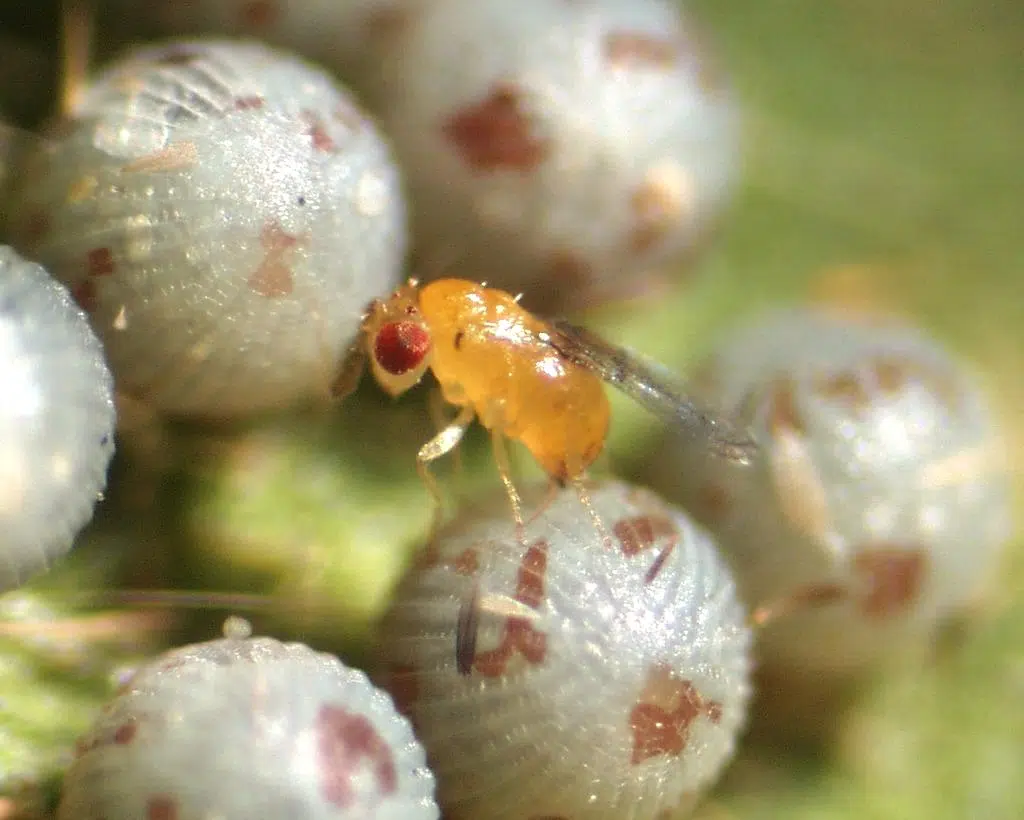
Trichogramma (Trichogramma spp.) are tiny beneficial insects used worldwide in biological pest control. These microscopic parasitic wasps are only about 0.3 to 0.7 mm long, but they play a huge role in protecting crops. Their main job in nature – and in modern agriculture is to parasitize the eggs of harmful insects and stop pests before they can damage plants.
Trichogramma wasps are egg parasitoids. A female Trichogramma finds the
eggs of pest insects, mainly moths and other plant dammaging pests, and lays her own
eggs inside them. The Trichogramma larvae that hatch feed on the
contents of the pest egg, which prevents the pest from developing and
emerging.
Trichogramma are used to control many economically important crop pests. They are especially effective against:
European corn borer (Ostrinia nubilalis)
Cotton bollworm (Helicoverpa armigera)
Cabbage moth (Mamestra brassicae)
Grapevine moth (Lobesia botrana)
Spider mites (Tetranychus urticae)
Dark pea moth (Cydia nigricana)
Cabbage white butterfly (Pieris brassicae)
Sorrel white (Pieris rapae)
Whiteflies (Aleyrodidae family)
Cherry fruit fly (Rhagoletis cerasi)
Pine sawflies (Diprion pini)
Pine budworm (Dioryctria abietella)
Sawflies (various Tenthredinidae species)
And approximately 90 other pest species
Through seasonal releases (also called seasonal colonization), Trichogramma wasps provide reliable and sustainable pest control in a wide range of crops and agricultural systems.
Trichogramma are a key component of Integrated Pest Management (IPM) and organic farming. Using Trichogramma for pest control:
Is safe for humans, plants, and animals.
Because of these benefits, Trichogramma-based biological control fits perfectly into sustainable agriculture and eco-friendly crop protection strategies.
In the field, Trichogramma wasps overwinter as pre-pupae inside the eggs of their hosts. These hosts include moths, leafrollers, geometrid moths (Geometridae), white butterflies (Pieridae), and other species that often live on weeds and plant residues.
The life cycle of Trichogramma is not strictly synchronized with that of any single host. This flexibility means they can:
This adaptability is one of the reasons Trichogramma are so valuable in long-term, sustainable pest management.
Thanks to their effectiveness and ability to reproduce in large numbers, Trichogramma are mass-reared in biological control laboratories. They are then released in crops using seasonal colonization methods to ensure continuous protection.
Using Trichogramma wasps for biological pest control:
For growers looking to reduce chemicals and improve sustainability, Trichogramma offer a proven, natural solution for pest control.
No, Trichogramma are harmless to people, pets, and non-target beneficial insects like bees. They are highly specific to pest eggs.
No, they parasitize a high percentage (often between 65% and 90%) but do not eliminate all pest eggs. Timing releases when pest eggs are fresh maximizes effectiveness.
They are mass-reared in labs and released during the pest’s egg-laying period to ensure they parasitize the most eggs possible.
Yes, they are widely used in Integrated Pest Management (IPM) and organic systems because they reduce chemical pesticide use and protect environmental health.
Factors like temperature, humidity, and availability of pest eggs influence how well Trichogramma perform. Proper timing and conditions are essential for success.
Trichogramma wasps are highly specific egg parasitoids that mostly target pest insect eggs, especially those of moths and butterflies. Naturally occurring populations generally have minimal impact on non-target species because their parasitism is focused and selective.
However, introducing or augmenting populations with non-native or high-density strains can pose some risks. These introduced wasps may parasitize eggs of non-target native insects, potentially altering local insect communities and biodiversity. Therefore, biological control programs must carefully assess ecological risks and monitor effects on non-target species, especially when using non-native Trichogramma strains.
In areas where Trichogramma are naturally present without intervention, their impact on biodiversity is typically low and part of the natural ecological balance.